A pre-trip protocol for finding a urologist overseas, handling payment, crossing language gaps, and spotting symptoms that mean hospital right now.
Part 4 of 4 in the series Go Anywhere: The Traveller's Guide to Urological Confidence.
Your medication is documented, legal and packed. Your supplies cleared security without a second glance. The last piece of the puzzle is the one almost nobody plans for: what happens if something goes wrong at 2am in a city where you do not speak the language.
This series was shaped by insights from Dr. Matthew Karlovsky, whose work with bladder and pelvic patients highlights a simple truth: urological emergencies rarely arrive politely during business hours. A blocked catheter, a sudden inability to urinate, or a fever on top of a urinary infection all move fast. The people who handle these situations well abroad are almost never improvising. They are the ones who spent forty minutes before the trip building a short list and writing a few things down.
Most travel health advice assumes you can walk into any clinic and get help. That mostly works for a sprained ankle or a stomach bug. Urology is narrower. A general practitioner in a small coastal town may never have placed a suprapubic catheter, may not stock the French size you use, and may not recognize the difference between routine urgency and acute retention.
Acute urinary retention is the clearest example. It is painful, it worsens by the hour, and it needs a catheter, not a prescription. Knowing in advance which hospital has a urology department, and how far away it is, turns a crisis into an errand. Continuity matters here too: a urinary infection treated with the wrong antibiotic, or a catheter replaced with mismatched equipment, can create a second problem days later when you are somewhere else entirely.
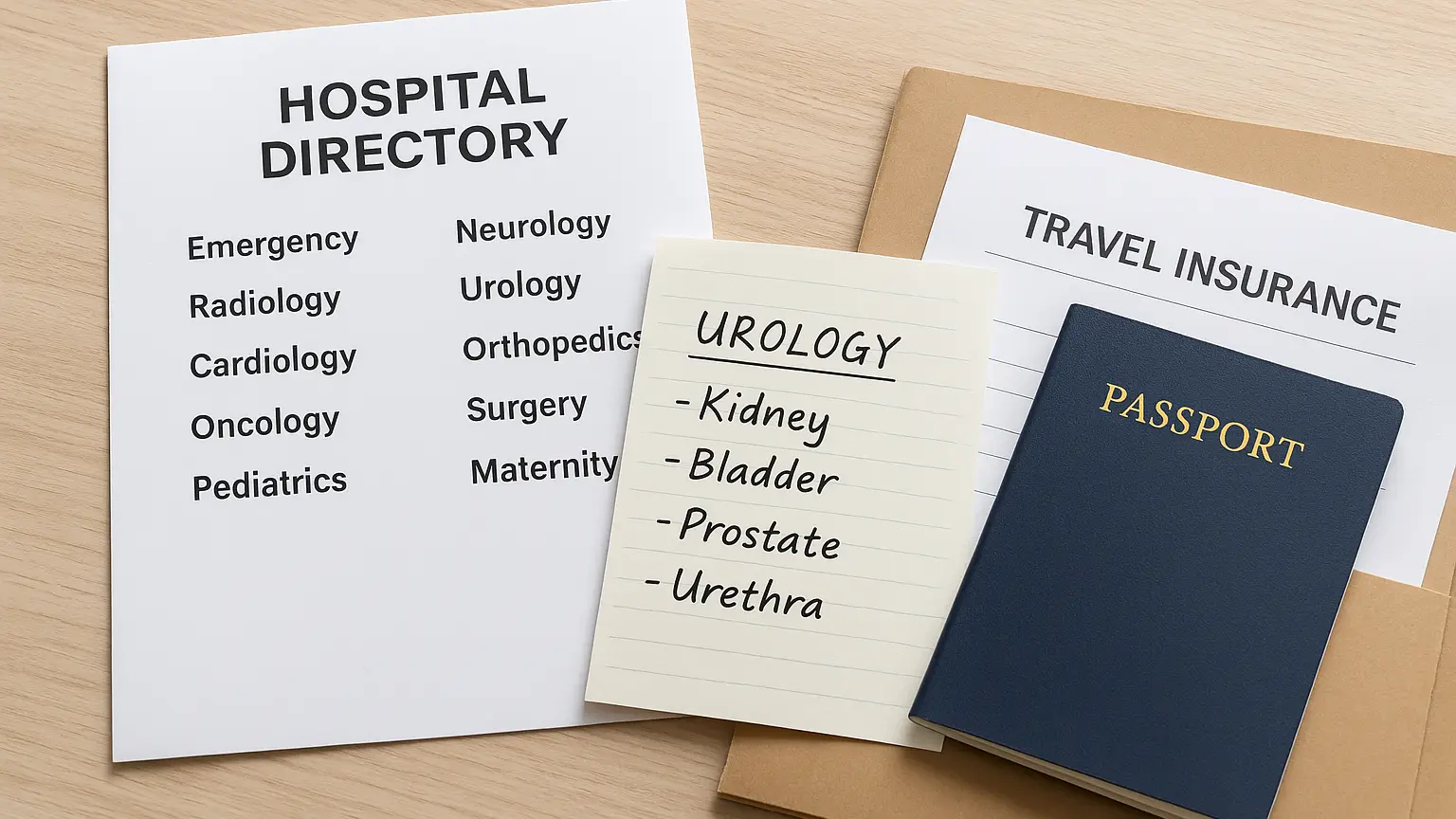
Do this once, and keep the file. It takes less time than choosing a hotel.
Keep all of this in one note on your phone, screenshot it so it works offline, and print one copy for your bag. Phones die. Paper does not.
The most common shock abroad is not the diagnosis. It is the invoice desk. In much of the world, hospitals expect payment or a guarantee of payment before treatment begins, and your home insurance card means nothing at the counter.
Before you fly, confirm three things with your insurer in writing: whether your policy covers a pre-existing urological condition, whether it pays the hospital directly or reimburses you later, and what number you must call to authorize treatment. That last point quietly ruins trips. Some policies void coverage if you are treated without calling first, and at 3am you will not be reading the fine print. Write the authorization number on the same card as your medical summary.
Plan for paying up front and claiming later. A catheter change and a night of observation can run into four figures in a private facility. Make sure one card has enough available credit to absorb that, and tell your bank you are traveling so the charge is not declined as fraud. Keep every piece of paper: itemized bills, discharge notes, prescription receipts, even the pharmacy slip. Claims get rejected far more often for missing documentation than for genuine exclusions, which is the same principle behind the paperwork that protects your medication supply at the border.
You do not need fluency. You need about eight facts translated and printed. A one-page medical summary in English and the local language should cover your diagnosis, past surgeries, current medications with generic names and doses, allergies, catheter type and size if relevant, and your urologist's contact details. Have a clinician or qualified translator check it before you leave. Machine translation handles hotel bookings well and medical terminology poorly, and confusing "urinary retention" with "incontinence" sends a doctor in exactly the wrong direction.
Add a line describing your normal baseline. "I self-catheterize four times daily" or "I have a stoma and use a two-piece appliance" tells a stranger in thirty seconds what would otherwise take twenty minutes of guessing, which is the same kit thinking behind flying with a catheter or stoma and the supplies you keep within reach.
InterHealth works with organisations whose staff travel, relocate and deploy overseas. Preparation, support during an assignment and aftercare on return.
See our services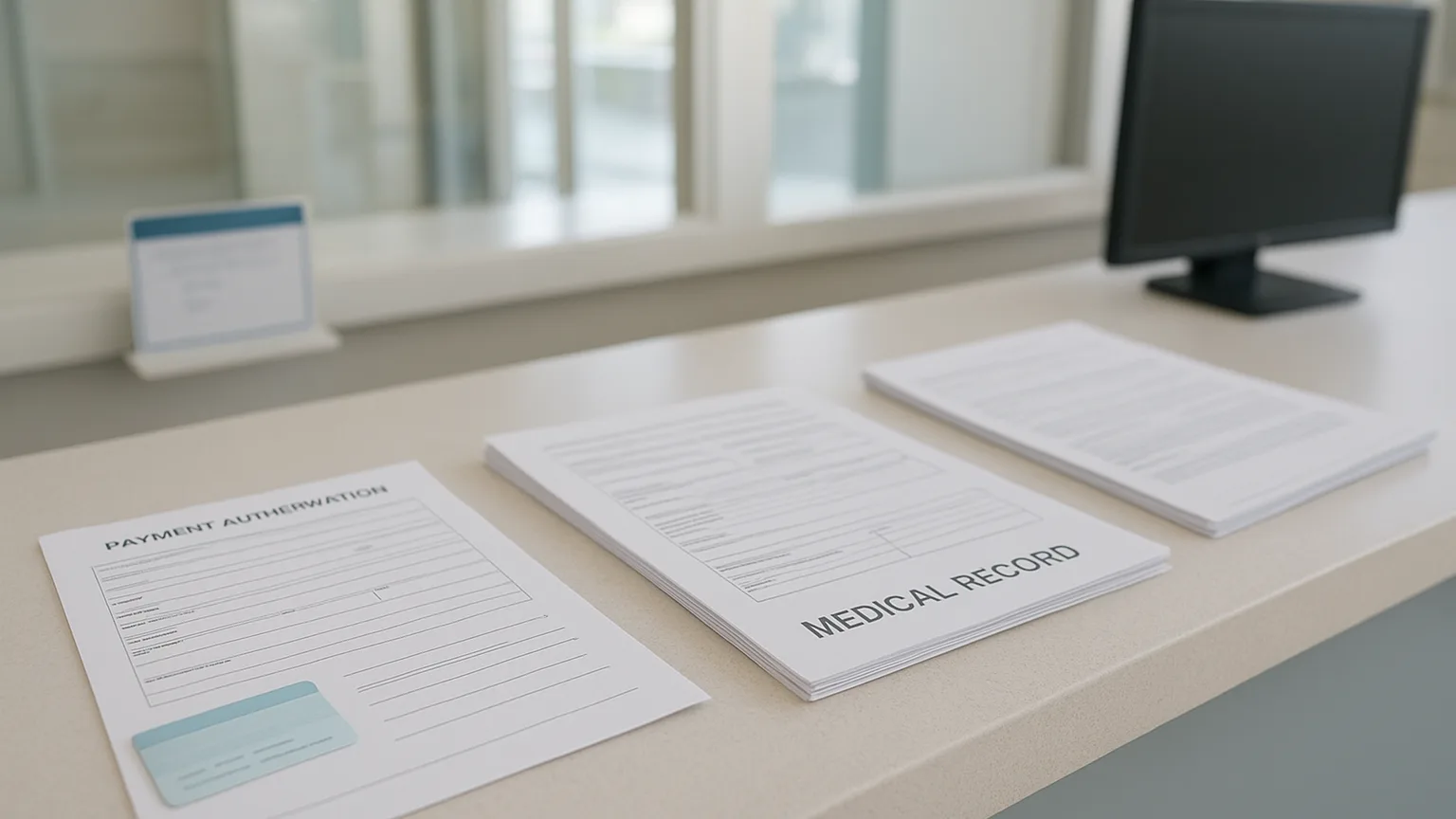
Travelers delay. You are tired, you are far from home, and you tell yourself it will settle by morning. Some things will. These will not.
Mild burning, slightly increased frequency, or a little cloudiness can usually wait for a same-day clinic visit. The rule of thumb is simple: pain plus fever, or an inability to empty, means hospital.
Foreign doctors work faster when they know what has already been done to you. Prior surgery changes the anatomy they are working with, and that changes the safe approach.
"When a patient arrives from overseas, the single most useful thing they can hand us is a list of previous procedures and any implanted material, because mesh complications and prior reconstructions completely change how we approach an urgent problem," says Elena Whitcombe, patient care coordinator at the linked practice.
Include implants, slings, stents, reconstructions and approximate dates. If you have had a recent procedure, carry the operative report. It weighs nothing and answers questions no amount of examination can.
Decide now who you call, what you say and what you hand over: insurer first if your policy demands it, then the hospital on your list, then someone at home who knows your history. Practicing the sequence once means you are not building it while in pain. Knowing where help is also lets you relax into a trip, much the way a sensible hydration rhythm from the smarter way to time your fluids keeps urgency from running your itinerary.
Across these four pieces, one pattern keeps repeating. The barrier to traveling with a urological condition is almost never the condition itself. It is the absence of a plan. Drink smart instead of drinking less. Pack the kit that clears security without drama. Carry the paperwork that keeps your prescriptions legal across borders. Know the hospital name before you need it.
You will probably never call the number you wrote down. Most travelers do not. But the confidence to book the flight, take the long train ride, and say yes to the trip comes from knowing the number exists. That is the real destination: not a life lived carefully around a bladder, but a life where the bladder is simply one more thing you packed for. Go anywhere. You are ready.
Planning travel for staff who deploy overseas? We handle preparation, in-post support and aftercare.
Talk to InterHealthInterHealth Worldwide supports organisations whose people travel, relocate and deploy overseas, from preparation and vaccinations through to aftercare on return.

