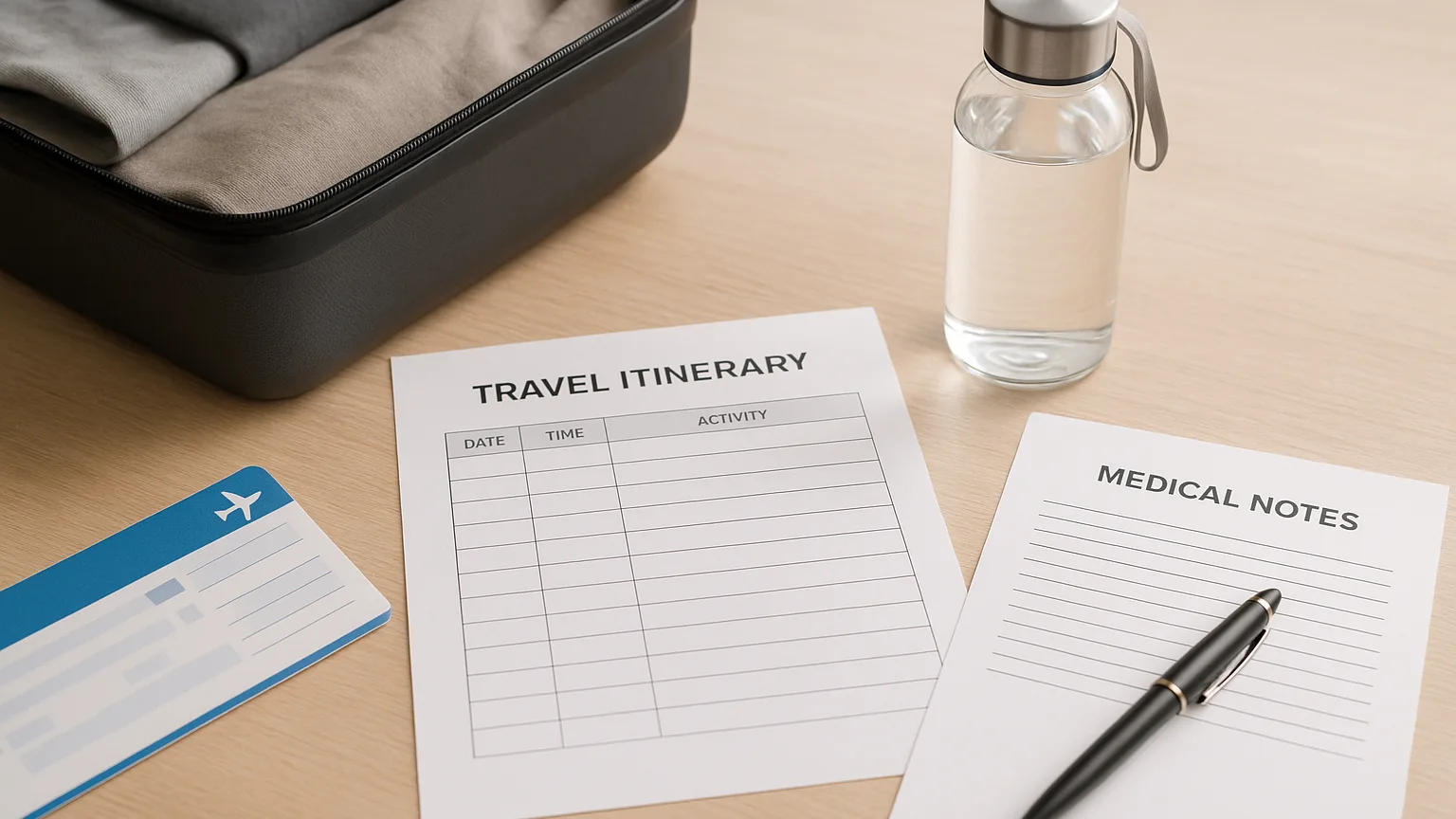
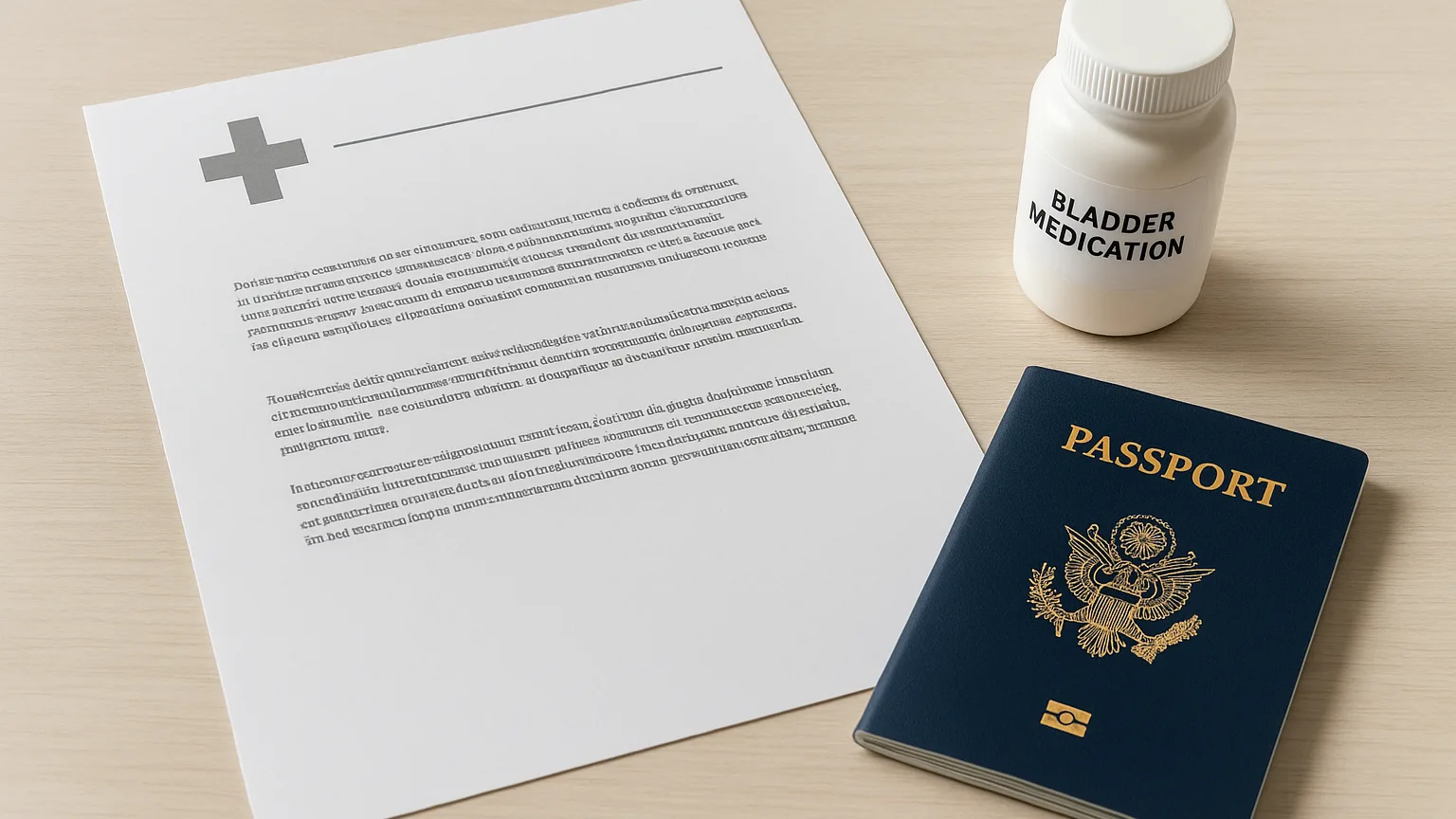
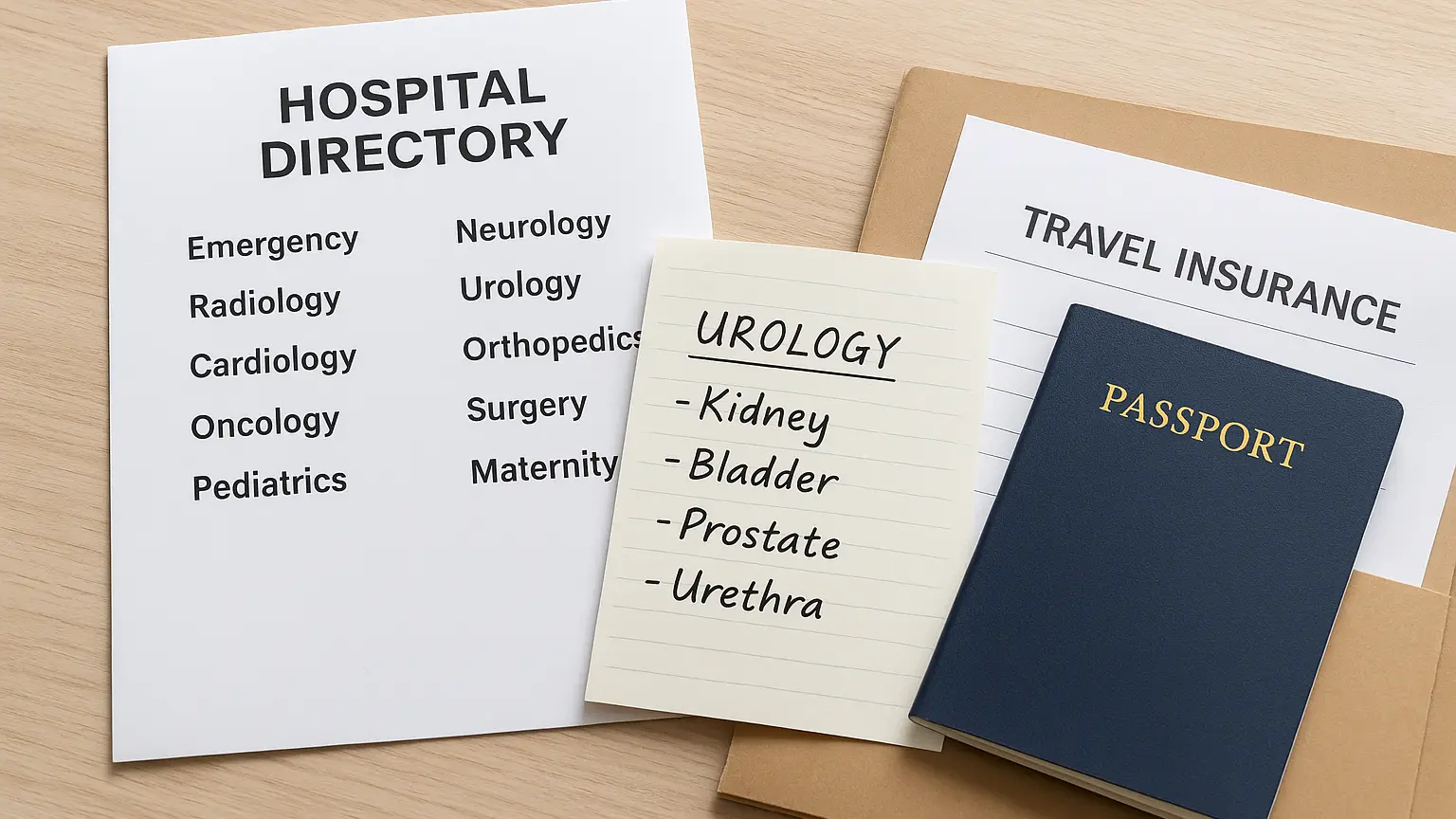
Four guides for travelling with OAB, a catheter, a stoma or urology meds: fluid timing, airport screening, border rules and finding care abroad.
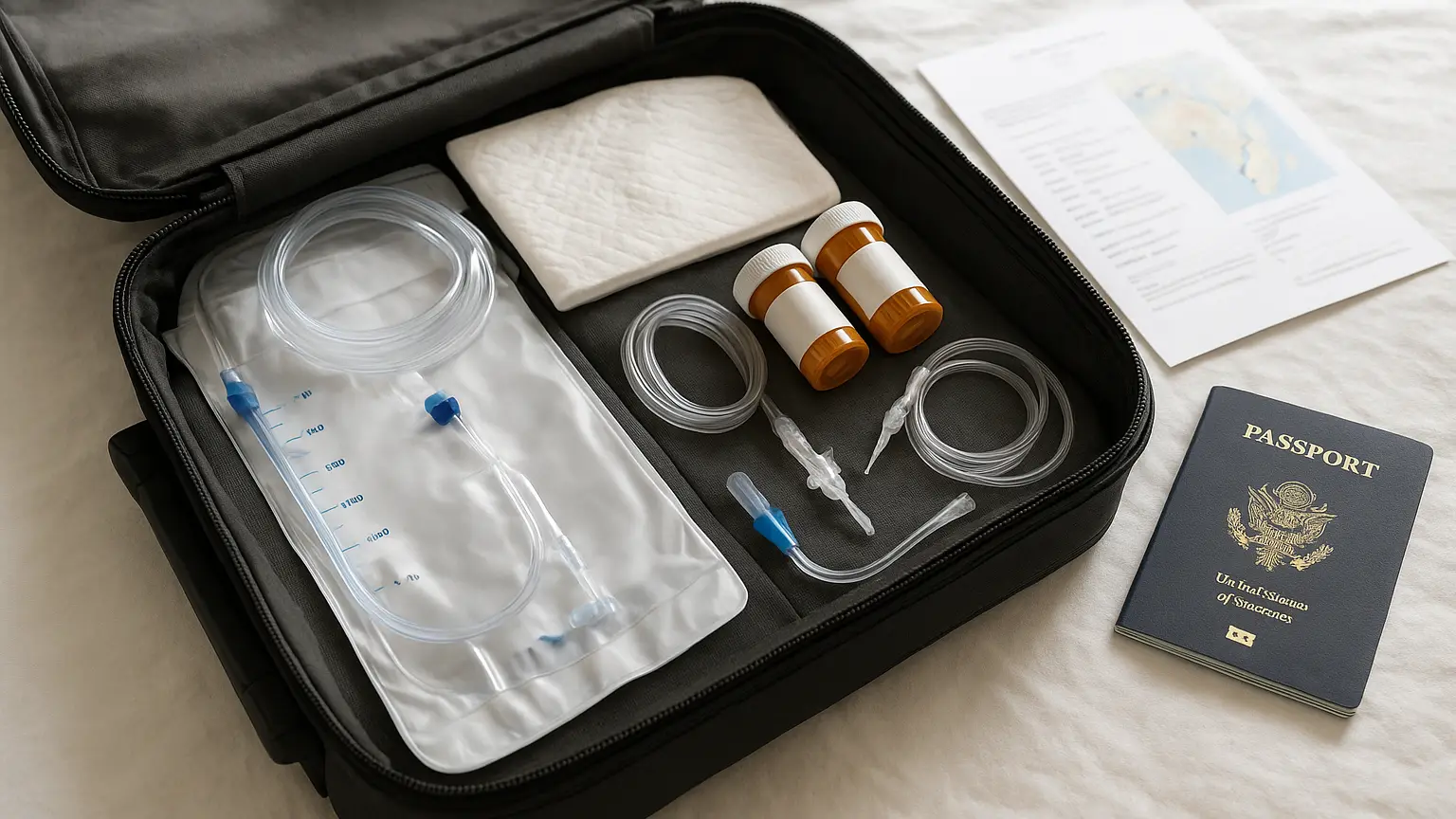
Four guides, one promise: a trip planned around your urology, not cancelled because of it. From the aisle seat to the customs desk to the clinic you hope never to need.
This series is for anyone who has quietly shortened a holiday, skipped a flight, or said no to a work trip because of a bladder. Maybe you have an overactive bladder and the thought of a three hour flight with one toilet makes your stomach drop. Maybe you use a catheter or have a urostomy and dread the security line. Maybe you take a medication that keeps you comfortable and have no idea whether it is legal where you are going.
The problem is rarely the condition on its own. It is the planning gap. Most travel advice treats urological issues as something to hide or endure, so people improvise: drink nothing, pack light, hope for the best. That approach fails in predictable ways, and it fails at the worst moments. The four parts below replace guesswork with a routine you can repeat on every trip, whether that is a weekend by train or three weeks across time zones.
Urologist Dr. Matthew Karlovsky contributed input that shaped the clinical thinking throughout this series, particularly around fluid management and when a symptom abroad stops being an inconvenience and becomes an emergency.
The first part takes apart the most popular piece of travel advice for overactive bladder. Cutting fluids concentrates urine, irritates the bladder wall and tends to increase urgency rather than calm it, usually around the time you are belted in for descent. In its place you get a timing approach: when to front load fluids, when to taper, what to avoid in the airport lounge, and how to use the hours before departure so your bladder is predictable rather than suppressed.
It also treats seat choice and route planning as clinical decisions, not preferences. That includes:
Part two is the airport walkthrough. It explains what screening officers can and cannot ask, how medical supplies sit outside standard liquid limits, and how to request a private screening without a long negotiation. The heart of it is a seven item carry on built for the failures that actually happen: a leak at 35,000 feet, a bag that will not drain, a connection that disappears. Cabin pressure changes behave in ways that surprise first time flyers, and the part covers how to manage that mid air with the small kit at your feet.
InterHealth works with organisations whose staff travel, relocate and deploy overseas. Preparation, support during an assignment and aftercare on return.
See our services
Prescription law changes the second you cross a border. Medicines that are routine at home can be controlled, restricted or outright banned elsewhere, and a few common bladder drugs sit on those lists. Part three sets out what customs officers actually look for, how to carry a supply that will not be questioned, and the single document that turns a tense conversation into a thirty second one. It also covers quantity limits, original packaging, and why splitting your supply between two bags matters more than people realise.
The last part is the one most travellers skip and later wish they had not. Finding a urologist in an unfamiliar country while in pain, in another language, with an unclear insurance picture, is a terrible first attempt at a plan. Doing it from your sofa a week before departure takes about twenty minutes. That part walks through identifying clinics near where you will actually be, checking what your policy pays and when, preparing a short medical history that survives translation, and recognising the symptoms that mean hospital tonight rather than a pharmacy tomorrow.
Read the series in order if you are planning your first trip since a diagnosis or a procedure. The parts build on each other: urgency management shapes your itinerary, your itinerary shapes your carry on, your carry on shapes what you declare, and all of it feeds the backup plan you hope to never open.
If you already have a system that works, jump straight to the gap. Travellers who fly often tend to have the airport sorted and the border rules wrong. People managing overactive bladder often have the medication side handled and have never built a realistic fluid schedule. Take what fills the hole in your plan, and leave the rest for the trip after this one.
Planning travel for staff who deploy overseas? We handle preparation, in-post support and aftercare.
Talk to InterHealthInterHealth Worldwide supports organisations whose people travel, relocate and deploy overseas, from preparation and vaccinations through to aftercare on return.