A catheter or stoma bag shouldn't cost you a trip. Here's the exact seven-item carry-on, screening script and in-flight routine that keeps flying simple.
Part 2 of 4 in the series Go Anywhere: The Traveller's Guide to Urological Confidence.
Part one of this series pulled apart the biggest myth in travel advice for bladder problems: that drinking less keeps you safe. Hydration stays on the plan; what changes now is the hardware. If you travel with a catheter, a urostomy or an ileal conduit, the worry is rarely the flight itself. It is the walk through the scanner, the stranger's question, the tiny lavatory, and the fear of a leak somewhere over the ocean.
This series was developed with insights from Dr. Matthew Karlovsky, whose work with catheter and stoma patients shaped one idea we kept coming back to: equipment failures on the road are almost never bad luck. They are packing decisions made three days earlier.
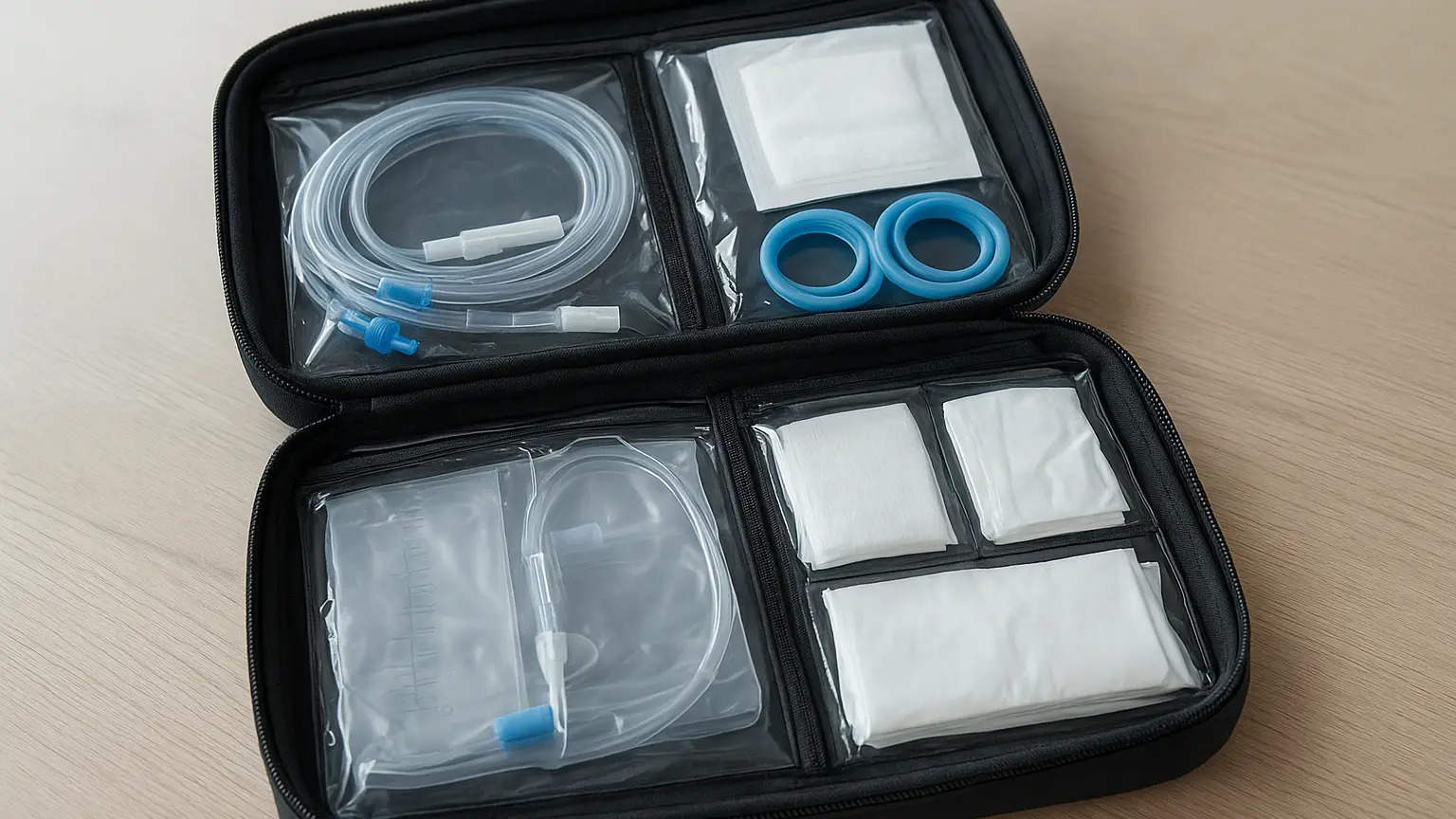
Checked bags get lost, delayed and rerouted. That hardly matters if you lose socks. It matters enormously if you lose a week of catheters in a country where your size is not stocked. So the rule is blunt: anything you cannot replace at a local pharmacy within an hour travels in the cabin. Checked luggage holds bulk backup only. Think of your carry-on as a self-contained 72-hour clinic that fits in an overhead bin.
The second rule is redundancy math: pack double what the trip needs, then add three days. Flights get cancelled, stomach bugs happen, and a pouch that normally lasts four days can fail in four hours when the adhesive meets sweat, sunscreen and a long taxi ride.
Everything else is optional. These seven are not.
Pack these in the order you will need them, not the order they fit. The change kit goes on top.
Empty your drainage bag in the terminal restroom right before you join the line. A full bag is heavier, more visible under clothing and more likely to prompt questions. If you use a leg bag, reposition and secure the straps so nothing shifts when you raise your arms. Keep the medical letter in your hand, not your bag, and the clear change kit on top of your carry-on so it can be pulled without digging.
Tell the officer before you step forward, in plain words: "I have a medical device attached to my body. It cannot be removed." You do not need to name your diagnosis or explain your surgical history. Short, calm statements move things faster than detailed ones.
Travelers managing recurring urinary retention often carry intermittent catheters in sealed packaging, and those packets stay sealed unless a supervisor has a specific reason otherwise. Ask for a supervisor politely if an officer starts opening sterile items. Build in an extra 30 minutes, not because screening usually takes that long, but because rushing is what makes the whole thing feel humiliating instead of routine.
InterHealth works with organisations whose staff travel, relocate and deploy overseas. Preparation, support during an assignment and aftercare on return.
See our services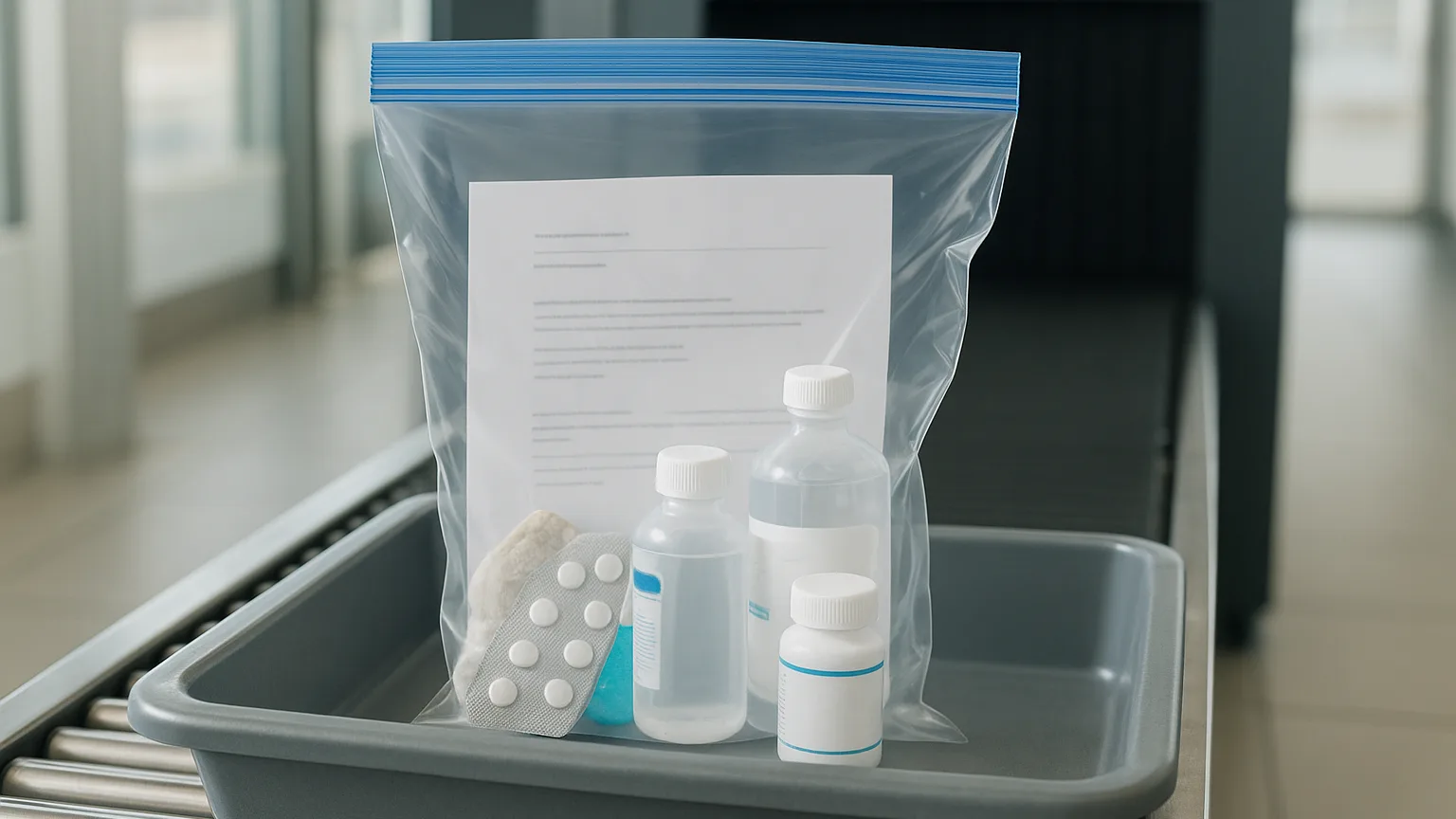
Gas expands at altitude, so stoma pouches inflate more than they do on the ground. Empty or vent before boarding, then again within the first hour of cruising. Drainage bags fill faster than people expect too, because pressurized cabins and dry air shift fluid around. Book an aisle seat near the lavatory, ideally forward of the wing where turbulence is gentler; a bulkhead row gives you floor space to manage a bag discreetly under a blanket. Set a phone alarm every two hours to check and empty, rather than waiting until you feel pressure.
If you catheterize intermittently rather than wearing a bag, that same two-hour rhythm matters for a different reason: skipping a planned catheterization on a long flight lets volume build quietly, and a bladder that won't empty can turn a routine trip into a diverted-flight conversation. Dry cabin air and the distraction of travel blunt the usual urge signals, so the clock is more reliable than sensation. Catheterize on schedule, full feeling or not.
Aircraft lavatories are cramped but workable if you have rehearsed. Lay a paper towel over the counter and work in order: remove, clean, dry, apply. Keep everything in the zip bag so nothing rolls into the sink. Never flush a medical supply. Bag it, seal it, and hand it to a flight attendant or carry it off with you.
"The people who travel best are the ones who did a practice run at home with only what fits in a shoebox," says Dana Whitfield, patient care coordinator at Arizona Bladder. "Once you know you can do a full change in a tiny space, the airplane bathroom stops feeling like a threat."
Know the brand names and generic equivalents of everything you carry, because rules on what crosses a border legally are stricter than most people assume, which is exactly where the paperwork that keeps your medication legal becomes the difference between a smooth arrival and a very bad morning. And if something does go wrong mid-trip, knowing in advance where to get help matters, which lining up a urologist abroad covers in detail.
Nobody with a catheter or stoma wants their trip to revolve around plumbing, and it does not have to. The seven carry-on items do the heavy lifting, the doctor's letter removes the debate at security, and the two-hour rhythm means you are never guessing whether you are due. Split your supplies, keep sterile items sealed, empty before boarding, and give yourself the extra half hour. Screening officers see medical devices every day, and a leak is a change of trousers rather than the end of a holiday. Pack like you expect a delay, and the delay stops mattering.
Planning travel for staff who deploy overseas? We handle preparation, in-post support and aftercare.
Talk to InterHealthInterHealth Worldwide supports organisations whose people travel, relocate and deploy overseas, from preparation and vaccinations through to aftercare on return.

