Cutting fluids before a flight makes urgency worse. Here's a smarter timing, seating and itinerary plan for travelling with an overactive bladder.
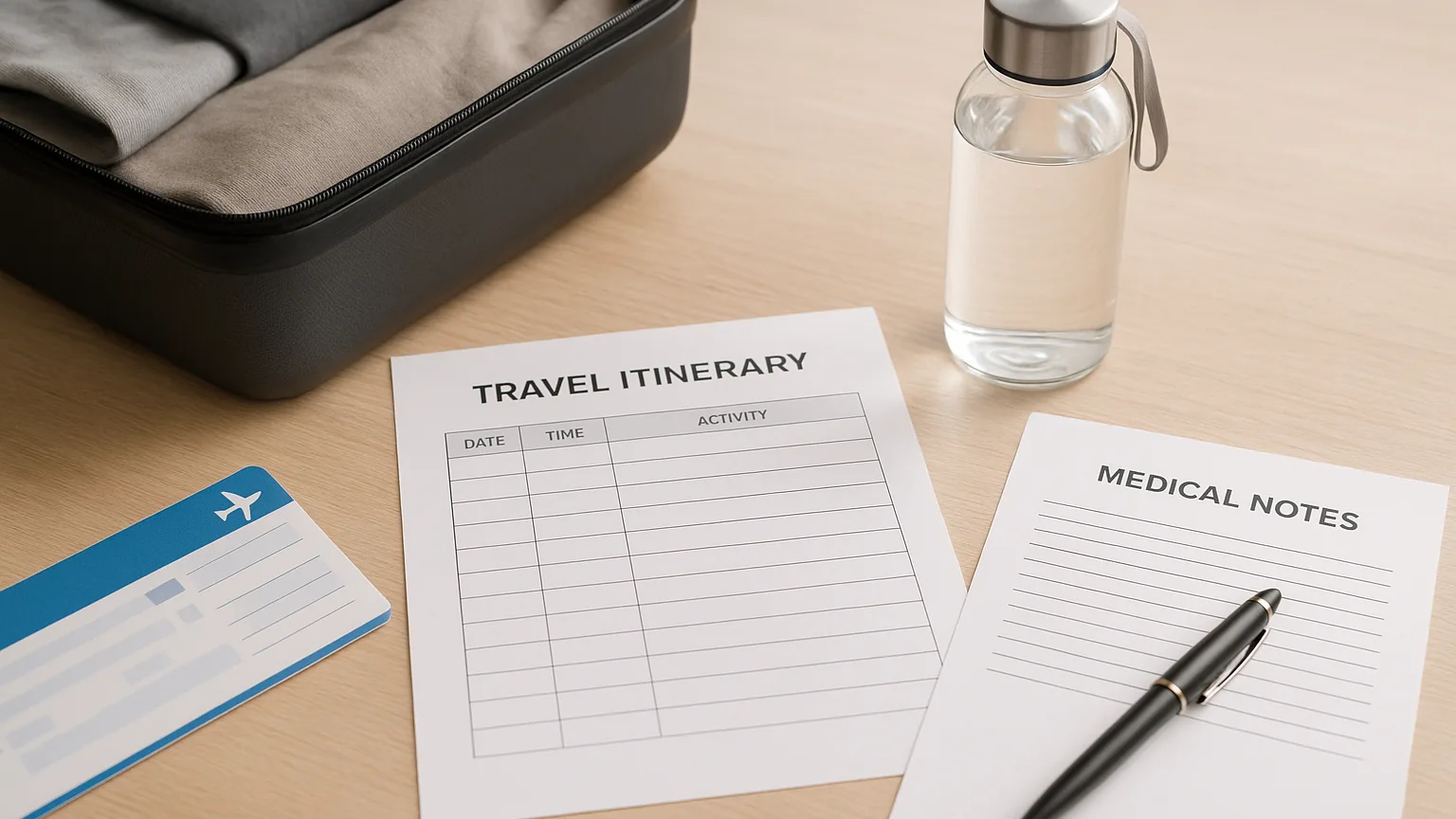
Part 1 of 4 in the series Go Anywhere: The Traveller's Guide to Urological Confidence.
Almost everyone with an overactive bladder has tried the same trick before a long journey: stop drinking. No water after breakfast, nothing at the gate, maybe a few sips once you land. It feels logical. Less in, less out. And it works for about ninety minutes, right up until the moment it turns on you.
This series was developed with insights from Dr. Matthew Karlovsky, whose work with bladder patients shaped how we approached this travel guide. One point comes up again and again in clinical practice: dehydration is not a bladder strategy. It is a bladder trigger.
Drink less and your urine gets darker and more concentrated: a higher load of salts, acids and waste sitting against an already sensitive bladder lining. For someone with an overactive bladder, that irritation is exactly what sets off the sudden, gripping urge that sends you sprinting up the aisle. You end up with a smaller volume of much angrier urine. Your bladder squeezes at 150ml instead of waiting until 350ml, so you go more often, not less, and each trip feels more urgent than it would have if you had simply stayed hydrated.
Dehydration in already dry cabin air also raises your risk of constipation and urinary tract infection. Both make bladder symptoms dramatically worse, and both tend to show up on day two or three of a trip, right when you wanted to be enjoying yourself.
The goal is not less fluid. The goal is fluid on your schedule instead of the bladder's.
Think of travel day fluid intake the way a runner thinks about race nutrition. Same total volume, different distribution: you are front-loading and tapering rather than restricting. A workable pattern for a morning departure looks like this:
Caffeine, alcohol, carbonated drinks and citrus juices are the four biggest in-flight offenders. Airport coffee before a five-hour flight is a genuinely poor trade. So is the complimentary wine, which acts as a diuretic and blunts the awareness that would normally warn you early. Water, herbal tea and diluted squash are the safer choices. If plain water bores you, bring a flavour drop, because boredom is the reason people reach for the cola.
Run the plan on a normal day at home a week before you fly, and note how long you actually go between voids on that schedule. If your real interval is 70 minutes, an itinerary built on two-hour gaps will fail. Design around your numbers, not the ones you wish you had. This rehearsal matters even more if you are managing equipment as well as fluids, and the practicalities of flying with a catheter or stoma deserve their own run-through before departure day.
InterHealth works with organisations whose staff travel, relocate and deploy overseas. Preparation, support during an assignment and aftercare on return.
See our services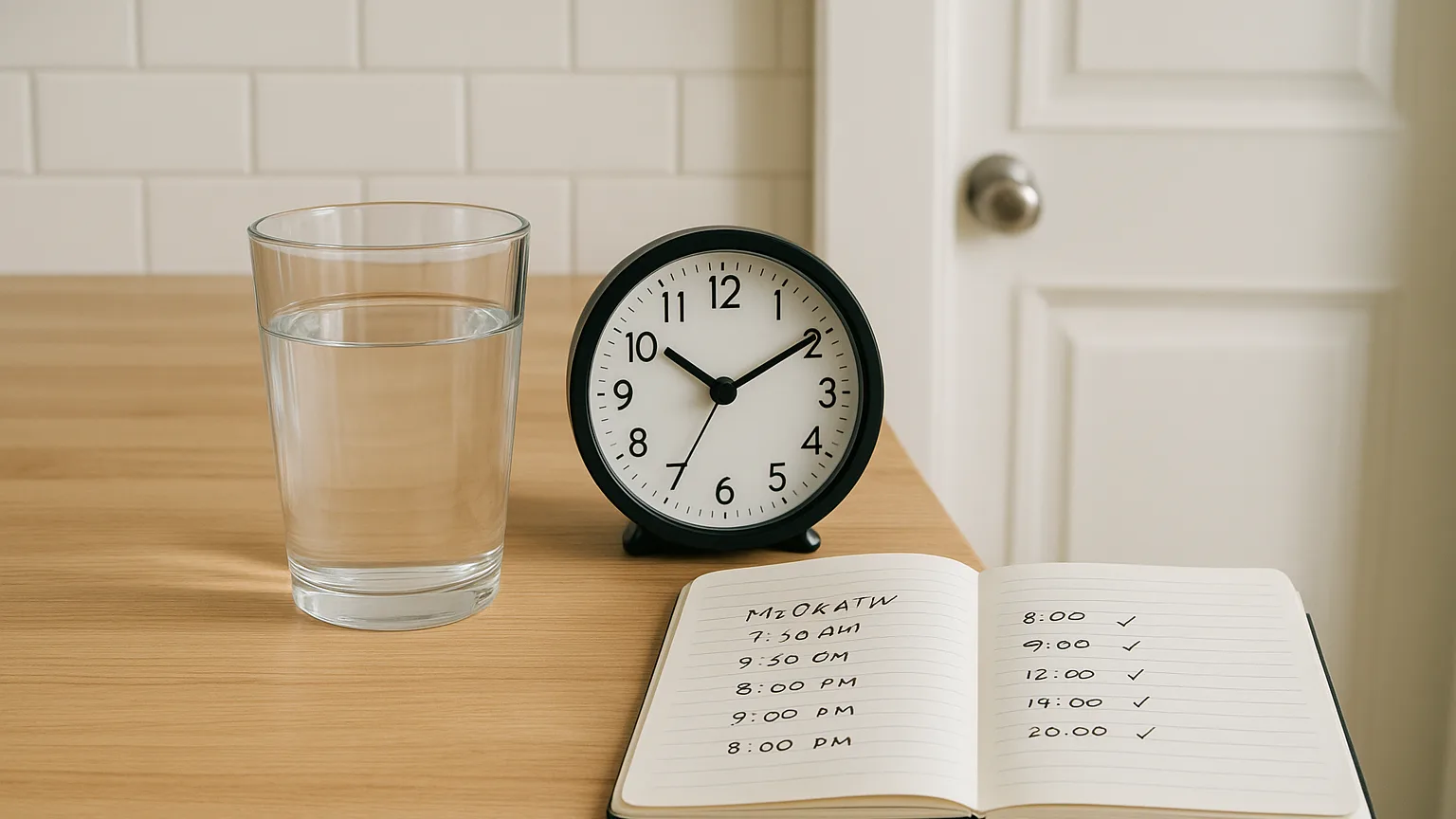
Where you sit changes the experience more than any supplement will. Aisle seat, always, and ideally within a few rows of a lavatory. On single-aisle aircraft the rear galley toilets usually have the longest queues, so a mid-cabin seat near a forward lavatory often beats sitting at the very back. Avoid the row directly beside the toilet: you get constant foot traffic, door noise and a queue standing over you. One row away is the sweet spot.
Arrive early enough to use a quiet terminal bathroom rather than a rushed gate dash. Many airports publish bathroom locations in their app, and knowing where the second-nearest one is saves you when the first has a queue. A bathroom finder app is worth installing for the destination city too. Bring a small kit: spare underwear, a change of trousers in your carry-on, absorbent pads if you use them, wipes and a sealable bag. Not because you expect an accident, but because the fear of one is itself a trigger. Anxiety tightens the pelvic floor and sharpens urgency, so knowing you are covered genuinely reduces the number of urgent episodes you have.
When the urge hits and you cannot move, do not stand and tense. Sit still, breathe out slowly, and do three to five quick pelvic floor squeezes, which triggers a reflex that calms the bladder muscle. Distract yourself for 60 seconds. The wave usually passes, buying you time until the sign goes off.
Medication deserves equal planning attention, since timing doses to the destination clock takes a few days to adjust, and the rules governing what you can legally carry vary widely once the paperwork that keeps your medication legal becomes part of the picture.
An overactive bladder narrows the world only when you let restriction become the plan. Drinking less feels like control, but it hands the bladder a more concentrated irritant and a shorter fuse. Steady hydration, tapered at the right moments, paired with a seat you chose deliberately and an itinerary that builds in bathroom access, gives you something restriction never will: predictability.
Start with one dry run at home, one honest measurement of your real interval, and one booking decision made around comfort instead of price. Next in this series, we walk through airport security with a catheter or stoma, and the exact carry-on kit that keeps equipment issues from ever becoming a crisis.
Planning travel for staff who deploy overseas? We handle preparation, in-post support and aftercare.
Talk to InterHealthInterHealth Worldwide supports organisations whose people travel, relocate and deploy overseas, from preparation and vaccinations through to aftercare on return.

